Computing

V. Sirso
Head of Year 7/ Teacher of Computing and IT

J. Asafo-Adjei Jnr
Assistant Headteacher - Attendance and Safeguarding
Vision
We intend for pupils to become fluent in key programming concepts, including sequencing, selection, iteration, variables and algorithms, enabling them to write, debug and evaluate code confidently. Pupils will also develop transferable skills such as collaboration, communication, project planning and evaluation, which support success across the wider curriculum and future employment pathways.
Digital literacy and online safety are embedded throughout the curriculum to ensure pupils understand how to use technology safely, responsibly and respectfully. Pupils will explore important themes such as cyber safety, digital footprints, online communication, misinformation, privacy and ethical use of technology. We aim to foster respectful online behaviour and equip pupils with the knowledge to navigate digital environments confidently and responsibly.
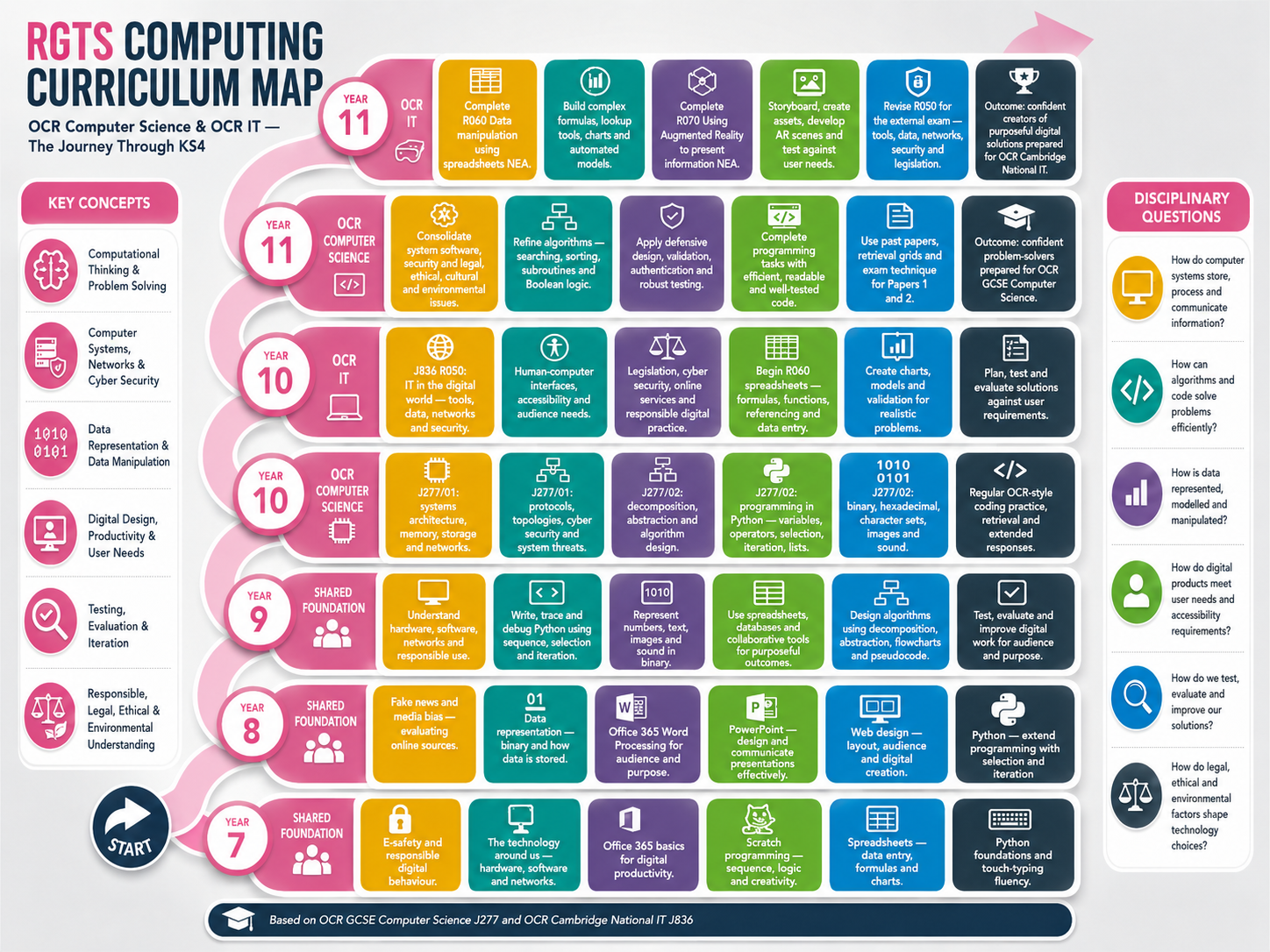
Our curriculum is sequenced to build knowledge progressively and challenge all learners, regardless of prior experience. Through ambitious teaching and engaging learning experiences, pupils will gain enthusiasm for technology and an appreciation of the impact of computing in modern society. By the end of KS3, pupils will possess the confidence, technical knowledge and independent learning skills required to successfully progress onto GCSE Computer Science and Cambridge National Level 1 / 2 in IT courses.
At Key Stage 4, pupils will deepen and extend their understanding of programming systems, computational logic and computer architecture. They will develop increasingly sophisticated problem-solving skills and gain a deeper understanding of how hardware, software and networks operate together within modern computing systems. Pupils will learn to design, create and evaluate algorithms and programs that solve complex problems efficiently and effectively.
Pupils will also explore the social, ethical, cultural and environmental impacts of technology, enabling them to critically analyse the role of computing in today’s society. Through vocational and academic pathways, pupils will further develop practical digital skills including project planning, interface design, AR creation, data analysis and interpretation. Our KS4 curriculum prepares pupils not only for examination success, but also for future study, employment and active participation in an increasingly technological world.
Intent
At Royal Greenwich Trust School, our intent for Computer Science at Key Stage 3 is to provide every pupil with a broad, ambitious and knowledge-rich curriculum that equips them with the digital skills, computational thinking and technological understanding required to thrive in an increasingly digital world. Through the three core strands of Computer Science, Information Technology and Digital Literacy, pupils will develop the confidence, resilience and creativity needed to become responsible and capable digital citizens.
By the end of KS3, we expect pupils to have developed secure foundations in computational thinking, programming, problem solving, logic and design. Pupils will learn how computer systems work, how data is represented, and how technology is used within the real world. They will apply their understanding through practical and engaging experiences, including programming projects, digital media creation, data handling and web-based applications. Our curriculum is designed to encourage curiosity, innovation and analytical thinking whilst allowing pupils to independently design, test and refine solutions to real-world problems.
Curriculum Map