Maths
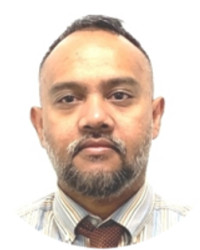
M. Rahman
Head of Faculty
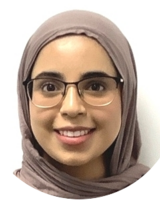
M. Hussain
Second in Charge of Maths
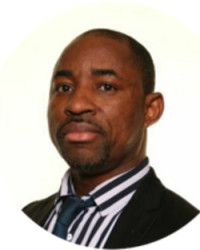
J. Chinwenwa
Lead Teacher of Maths
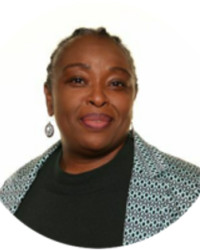
P. Adodo
Assistant Headteacher (SENDCo) and Teacher of Maths

D. Heppell
Assistant Headteacher and Teacher of Maths
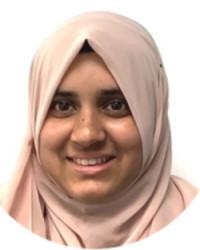
M. Bari
Teacher of Maths
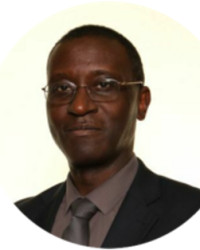
F. Mbuyongha
Teacher of Maths
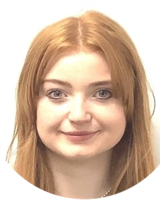
E. Arnott
Teacher of Maths
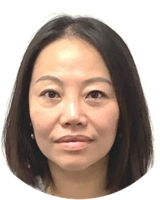
S. Li
Teacher of Maths
Vision
The Maths Curriculum at RGTS has been developed to promote and encourage learners to appreciate that
- Mathematics is a universal language, it allows us to communicate with others and to understand, affect and develop the world around us.
- Mathematics is the key that opens the door to other aspects of life and underpins other areas of the curriculum.
- Mathematics is a subject of beauty and this can be seen in many things from the plants and people we see around us to the machines and technology we design and use in our daily lives.
Mathematics fosters reasoning and problem solving leading to mastery and logical thinking which builds well rounded and aspirational citizens of the future.
Intent
Throughout the lower years, we give students opportunities to;
- become fluent in the basic concepts
- reason mathematically at all stages
- solve problems by using the skills from above
From there, we take this knowledge and build upon it in the later years. Through the later years, the three elements of fluency, reasoning and problem solving are still prominent. The content in later years is based heavily on the concepts taught in the earlier years. We have designed the curriculum such that the interconnected nature of mathematics is prevalent. Concepts are studied using prior knowledge and in various context, one example is that we use perimeter of shapes to link the use of adding decimal numbers together. This is a feature of our curriculum.
The new KS4 curriculum is being developed so that it is focused on students developing mastery of mathematics and involves:
- develop fluent knowledge, skills and understanding of mathematical methods and concepts
- acquire, select and apply mathematical techniques to solve problems
- reason mathematically, make deductions and inferences and draw conclusions
- comprehend, interpret and communicate mathematical information in a variety of forms appropriate to the information and context.
Curriculum Leaflet
.png)